
Deity
Śrīmatī Rādhārāṇī
Part of Goloka
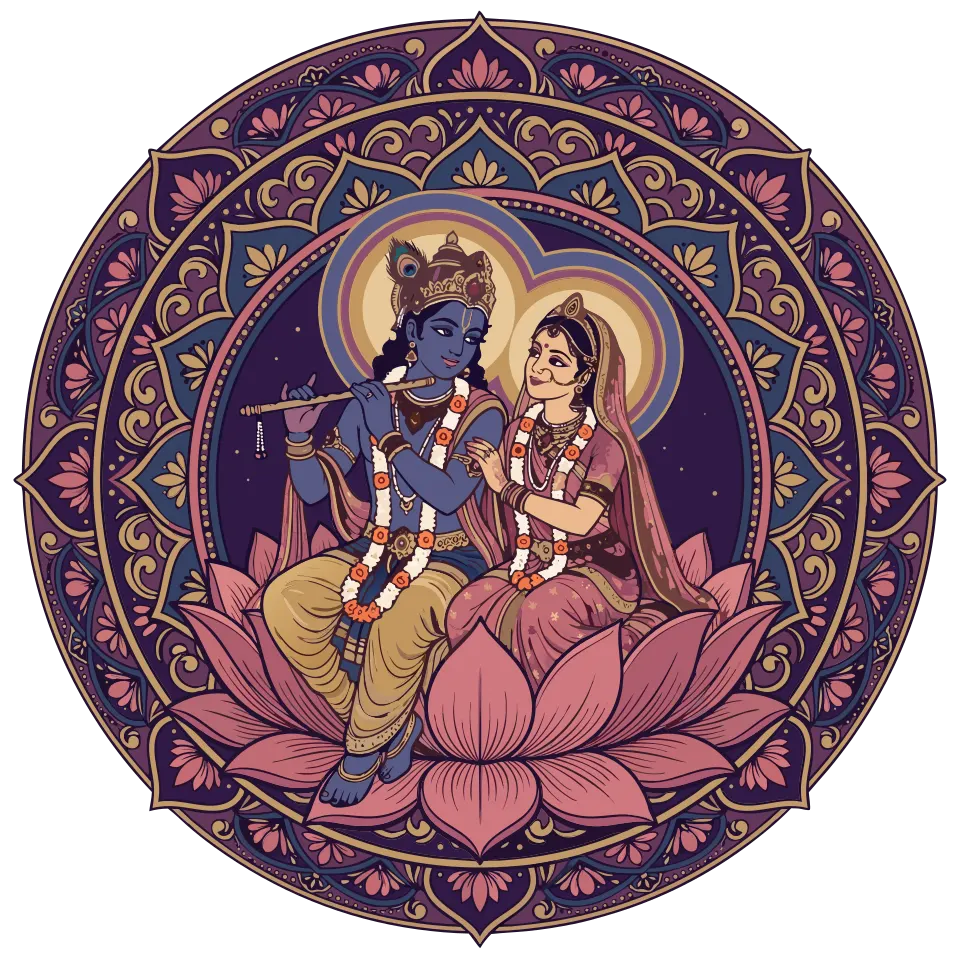
Not admiration — attention
What Rādhā stands for is devotion at its most concentrated: not a vague warmth toward the divine but complete attention to one person, wanting his joy rather than one's own reward. writers treat her as the measure of how far love can go — every other devotee's love is described by how much of hers it carries.
Longing as part of love
Her story is also the tradition's way of thinking about separation. The Bhāgavatam's account of the rāsa dance never names Rādhā; later commentators read her into the moment Kṛṣṇa leaves the circle to be alone with one . The point is not a love triangle — it is that the most intimate love turns out to be the least possessive, holding to the beloved's happiness even through absence and longing (viraha), which the tradition counts as deepening love rather than failing it. These narratives use the language of human romance but are read as transcendent , not as a model for ordinary relationships.
At the central with Kṛṣṇa
Rādhā is why the chart's center reads as love and not rank — she is the tradition's image of devotion so complete it becomes the standard every other kind of love is measured against.
Source: Brahma-saṁhitā 5.37 (the hlādinī potency); Gauḍīya theological tradition · Chart / explanatory traditionThe tradition's highest example of love is also its least possessive one — it wants the other's happiness more than its own claim on them.